NEON ASSIST™
At Samsung Research America, I worked on NEON — artificial humans designed for natural, human-like interaction — translating conversational-AI based digital human technology into real-world products.
At Samsung Research America, I worked on NEON — artificial humans designed for natural, human-like interaction — translating conversational-AI based digital human technology into real-world products.
NEON Assist is a system of conversational AI-driven digital humans designed to look and behave like real people.

Built using video-grammetry, machine learning, and real-time rendering, NEONs are not traditional assistants — they act as digital representatives for businesses.

We explored how NEON could function across industries including:
- Customer service
- Healthcare
- Education
- Automotive
- Beauty
— working with partners to prototype real-world applications.

Across different industries, we were asking:
- Where does a digital human actually create value?
- When does conversation replace traditional UI?
- How should this “human” behave across contexts?
There were no clear answers — only possibilities.
My work focused on turning these open questions into structured product directions.
I worked as an interaction designer in the R&D team, building design directions and solutions across multiple scenarios. My work included:
• Conducting domain research (education systems, service flows, customer behavior)
• Identifying opportunities where human-like interaction adds value
• Defining product concepts and interaction models
• Structuring user journeys and conversational logic
• Designing end-to-end experiences from concept to high-fidelity
• Delivering build-ready designs and collaborating with engineering
I worked closely with product managers, UI designers and engineers to bring concepts into working demos.
Research was not about validation —it was about defining the product space.
Taking education as an example, I started by mapping:
- how students learn across platform
- show existing tools support (or fail to support) that process
- where guidance, explanation, and interaction break down
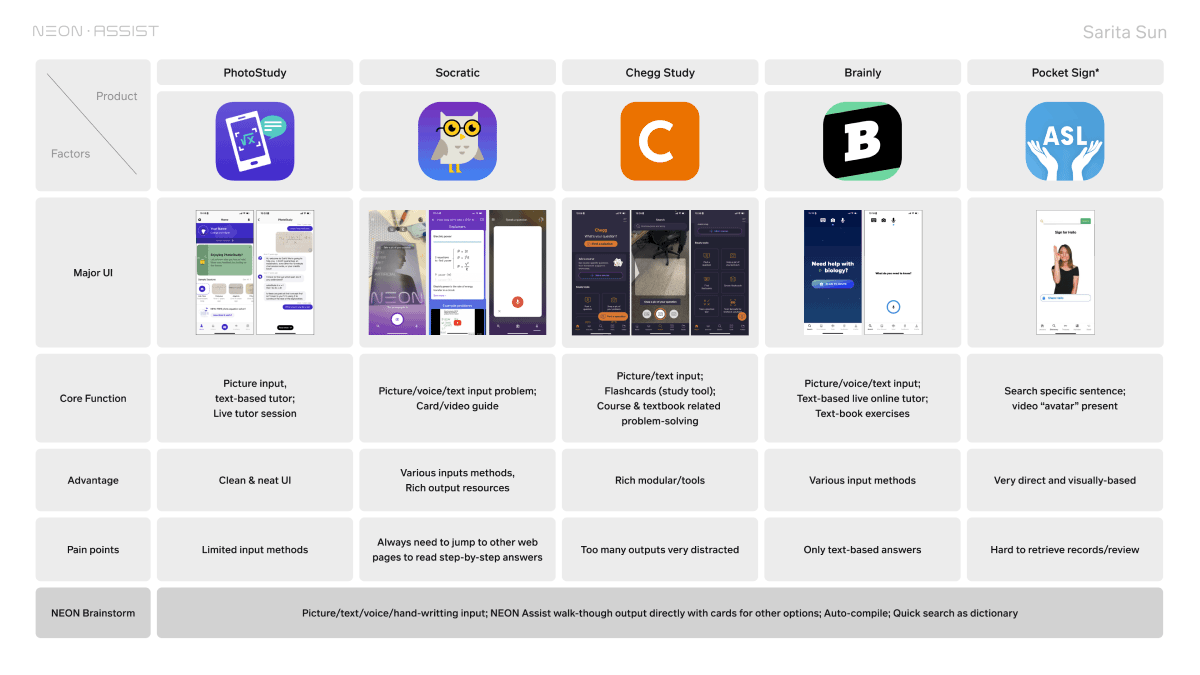
This included:
- analyzing existing education products and platforms
- reviewing learning flows and content structures
- identifying moments where human support becomes critical
Through this, a pattern became clear:
most tools deliver information — but not understanding
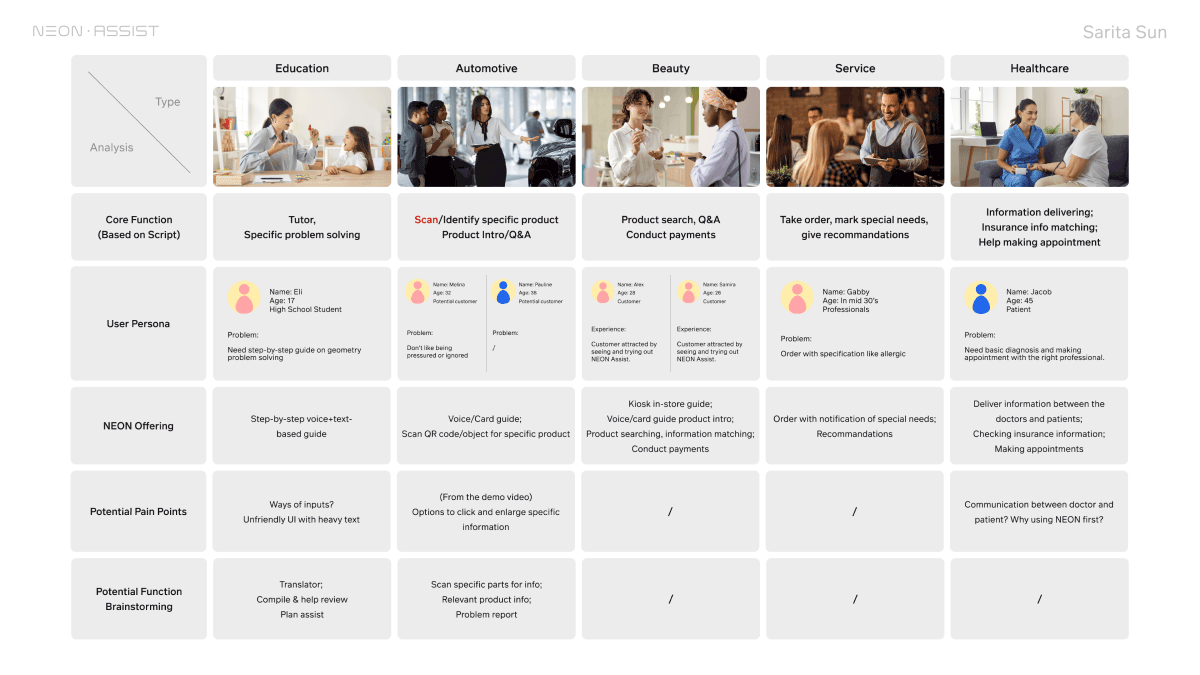
These insights shaped how we positioned NEON Assist.
Instead of designing it as:
a system that gives answers
We defined it as:
a system that supports understanding
This led to a set of guiding principles across scenarios:
- interaction should feel assistive, not mechanical
- conversation should reduce friction, not slow users down
- the system should adapt to user intent, not force structure
These principles helped turn open exploration intoclear product directions
These systems were applied across multiple contexts.
Rather than isolated concepts, they became real product explorations shaped by use cases and partners.
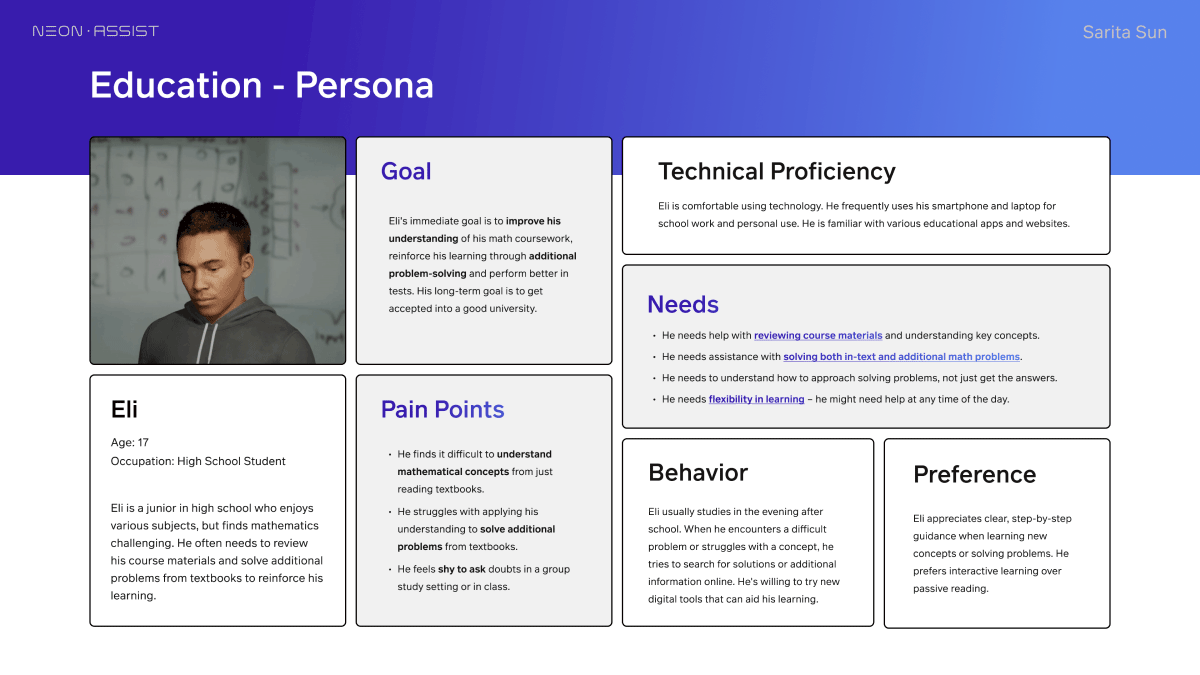
And than we can start building persons based on the scenarios.
Selected directions were developed into real demos.
This required translating design into something buildable:
- defining system behavior clearly
- delivering structured design outputs
- aligning closely with engineering and technical teams
Working with engineers,we brought these concepts into interactive environments.
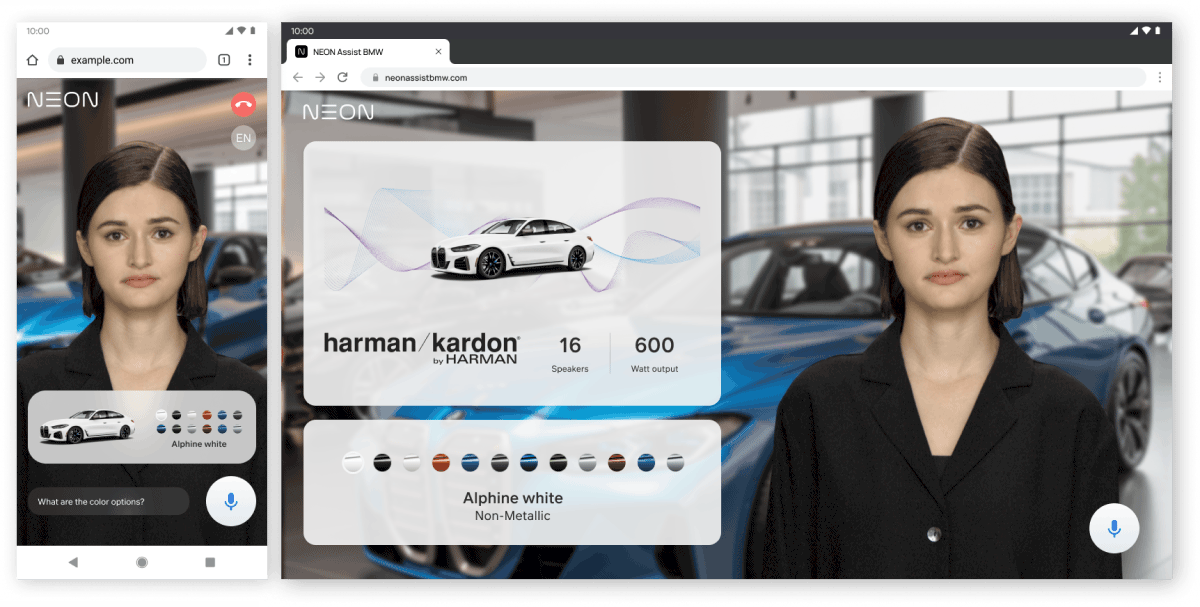
These two interfaces showcase the promotions and recommendations provided by NEON Assist to customers during the discovery phase.
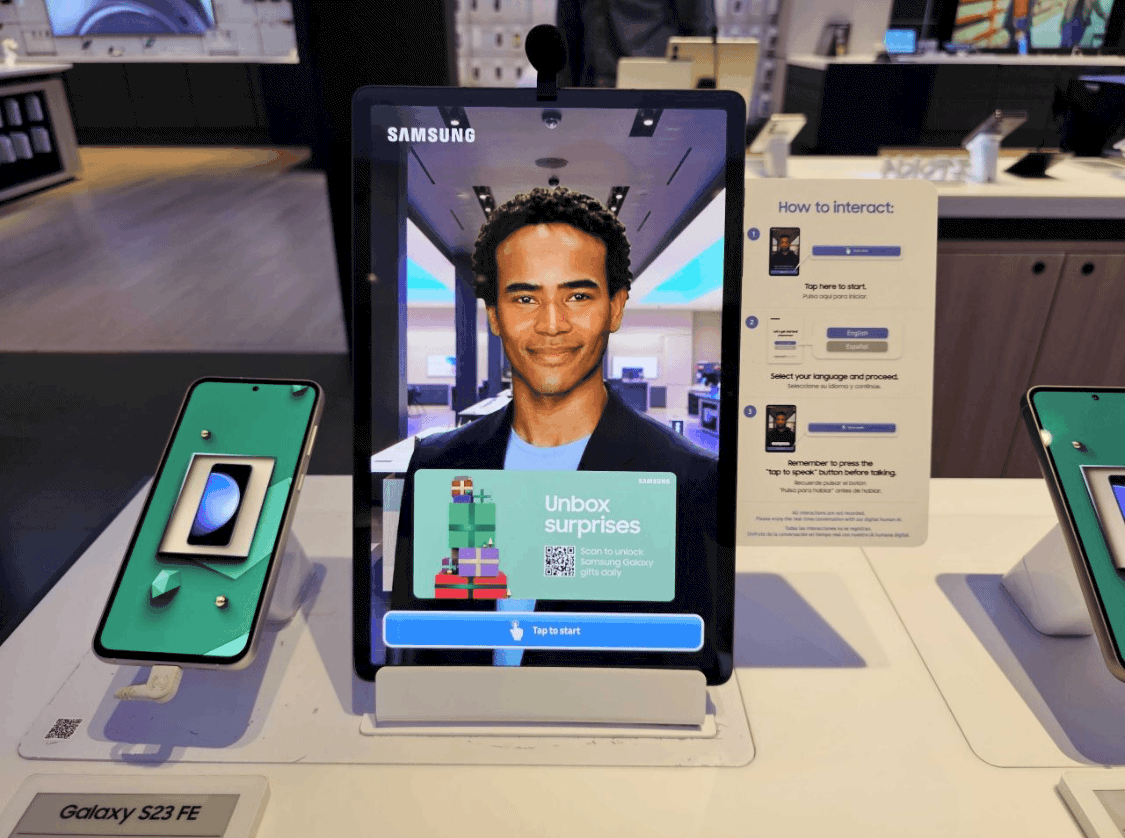
We designed NEON as a front-facing representative —handling ordering, assistance, and in-store interaction.
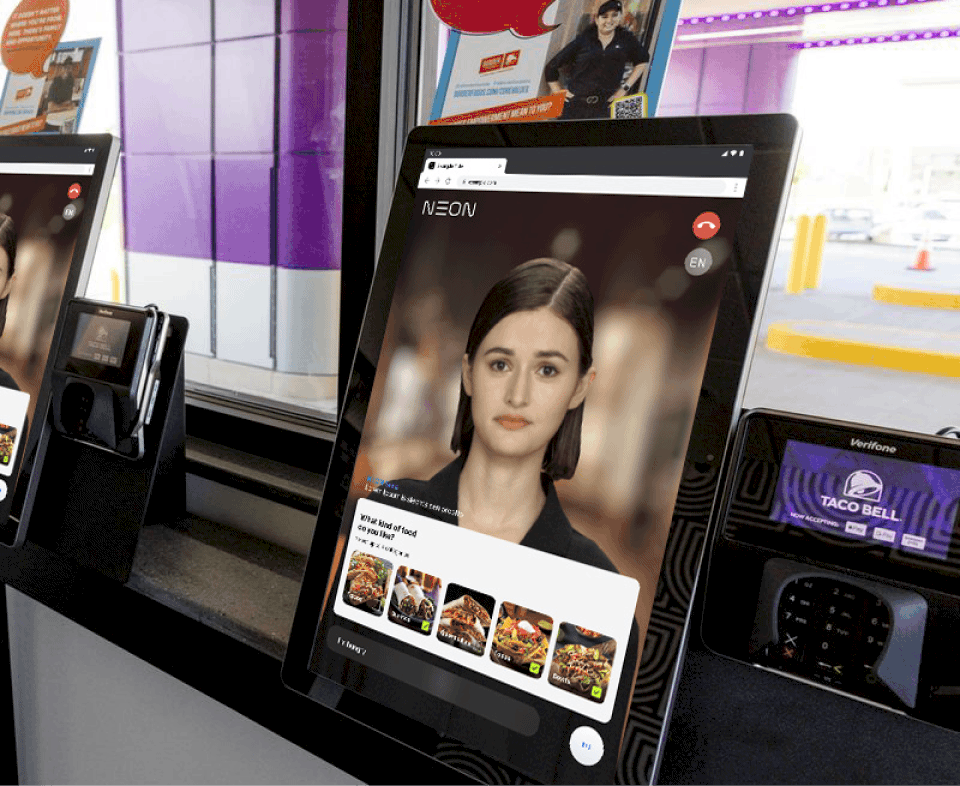
Including automotive and retail, where interaction needed to balance efficiency and human-like engagement.
If you would like to see a more detailed design for NEON Assist including deeper interaction design, system logic, and implementation details...
👉 A detailed case study is available please click here to access the case study with password


