NEON ASSIST™
At Samsung Research America, I worked on NEON — artificial humans designed for natural, human-like interaction — translating emerging AI technology into usable product experiences.
At Samsung Research America, I worked on NEON — artificial humans designed for natural, human-like interaction — translating emerging AI technology into usable product experiences.
NEON Assist is a system of conversational AI-driven digital humans designed to look and behave like real people.
Built using photogrammetry, machine learning, and real-time rendering, NEONs are not traditional assistants — they act as digital representatives for businesses.
We explored how NEON could function across industries including customer service, healthcare, education, and automotive — working with partners to prototype real-world applications.

As part of the NEON team, I was given the opportunity to research and design a couple of NEON Assist for business products alone. My role spanned from the initial research, crafting user journeys, and developing user flows, to wireframing and executing all UX design processes. I created the UI guidelines and sculpted the final high-fidelity mockups, ensuring NEON Assist emerged as a user-centric, innovative design.
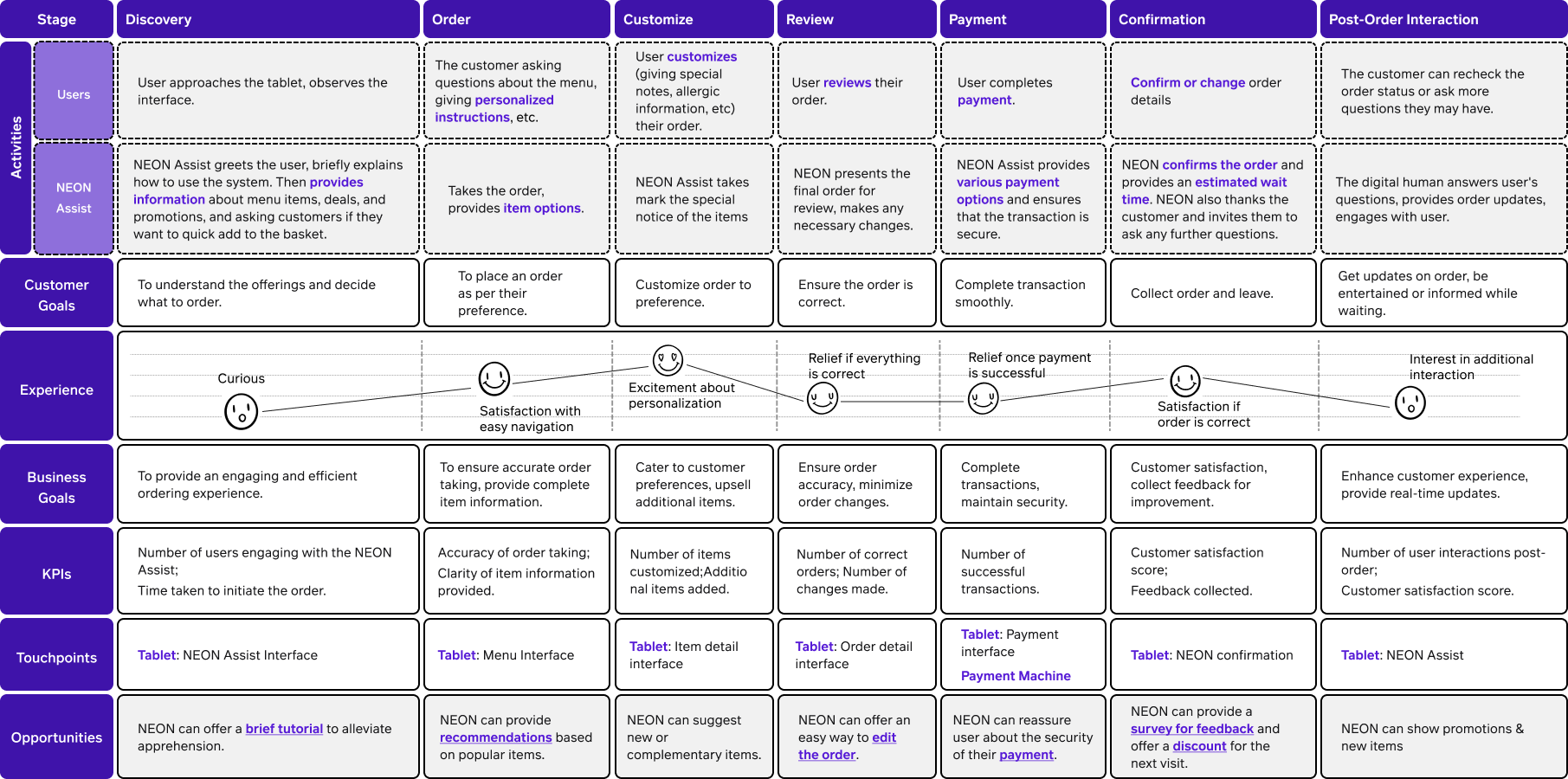
During my visit to Taco Bell, I closely observed the existing tablet ordering system. While it showcased strengths such as an intuitive interface and the ability to handle high-order volumes seamlessly, it had its limitations. The system struggled with intricate orders and lacked the personal touch that customers often seek. Moreover, it wasn't adept at assisting customers, especially those who aren't tech-savvy, with their queries. To gain a deeper understanding, I charted out the entire ordering experience, segmenting it into distinct stages.
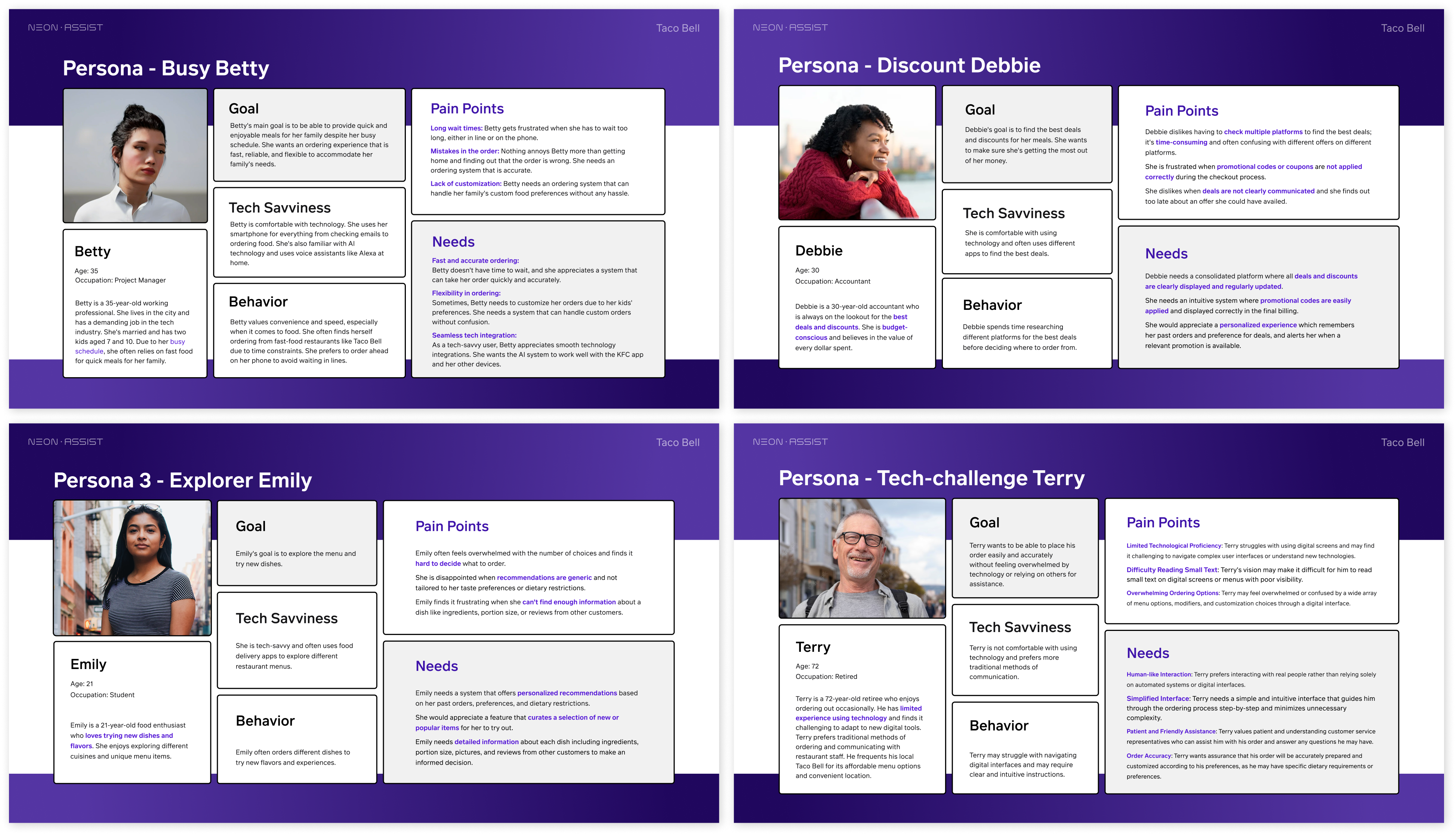
To ensure a design that truly resonated with the end-users, I embarked on an in-depth research phase at Taco Bell. This involved observing and understanding the myriad ways customers interacted with the existing system, their preferences, and the challenges they faced. This exploration was instrumental in shaping four distinct personas. Each persona encapsulated a unique set of customer characteristics and needs, serving as a beacon for the subsequent design and functionality of NEON Assist.
NEON Assist is envisioned to be a friendly and intuitive companion, guiding customers through their Taco Bell ordering journey. Designed to understand natural language and provide personalized recommendations, it aimed to be not just an ordering system but a knowledgeable assistant, ensuring a delightful and efficient ordering experience for every customer.

The journey of integrating NEON Assist into the ordering process was a multifaceted endeavor. It involved understanding the unique interactions of different personas, grappling with challenges of integration and time constraints, and devising solutions that were both innovative and consistent with existing systems.
The user journey was crafted to visualize and understand how customers from each persona would interact with NEON Assist, ensuring that the design catered to their specific needs and provided a seamless, intuitive, and engaging experience.
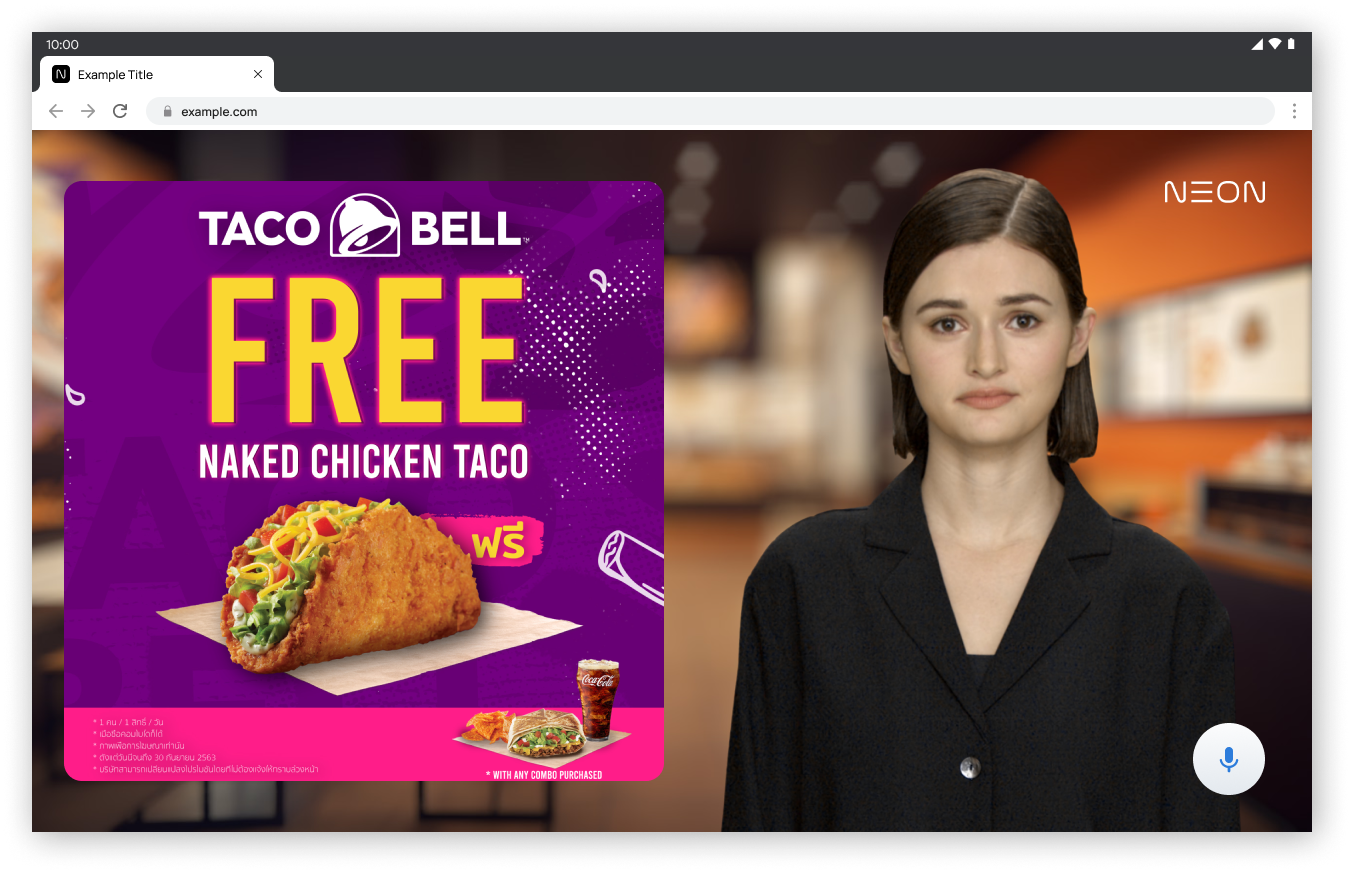
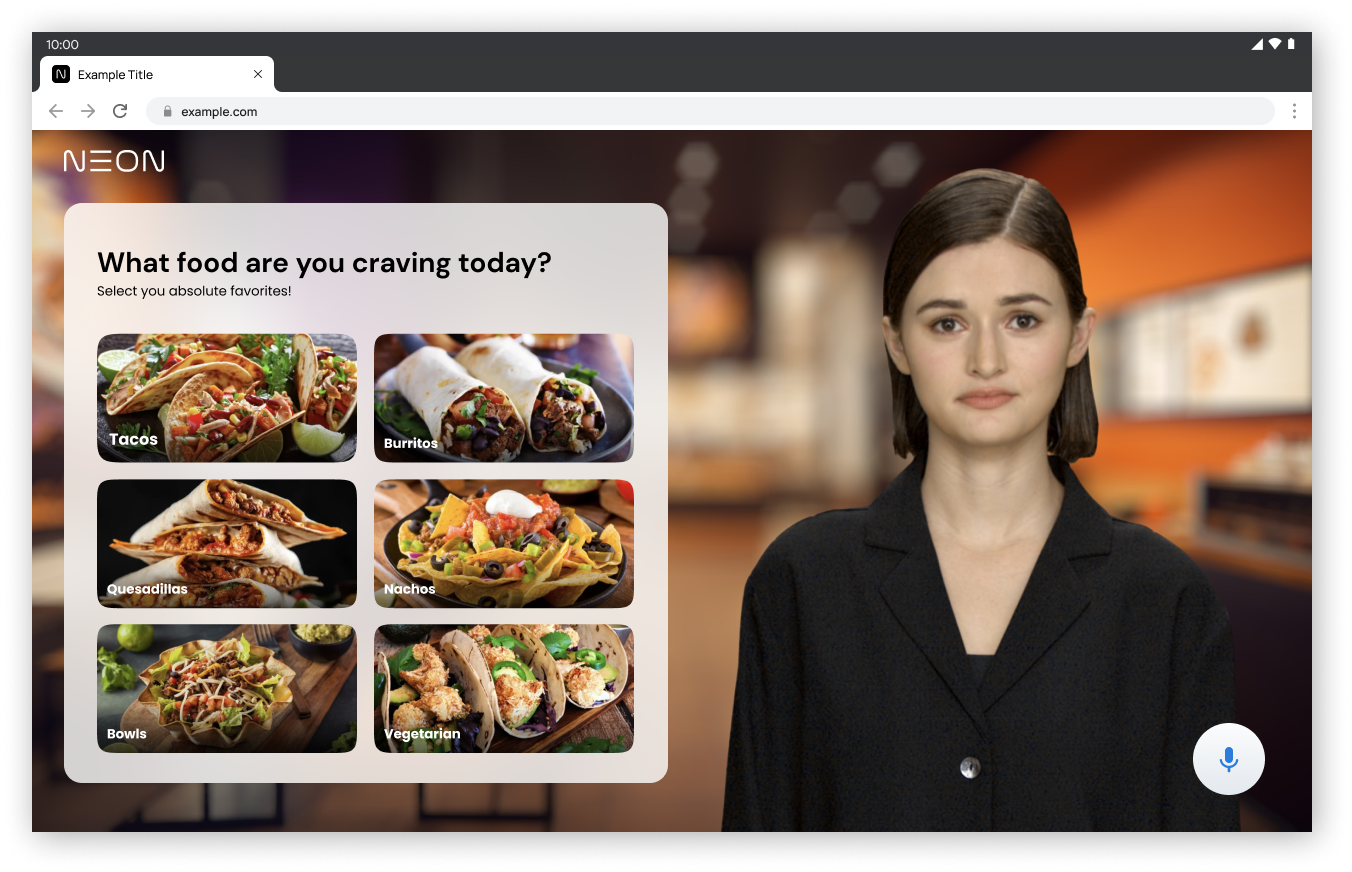
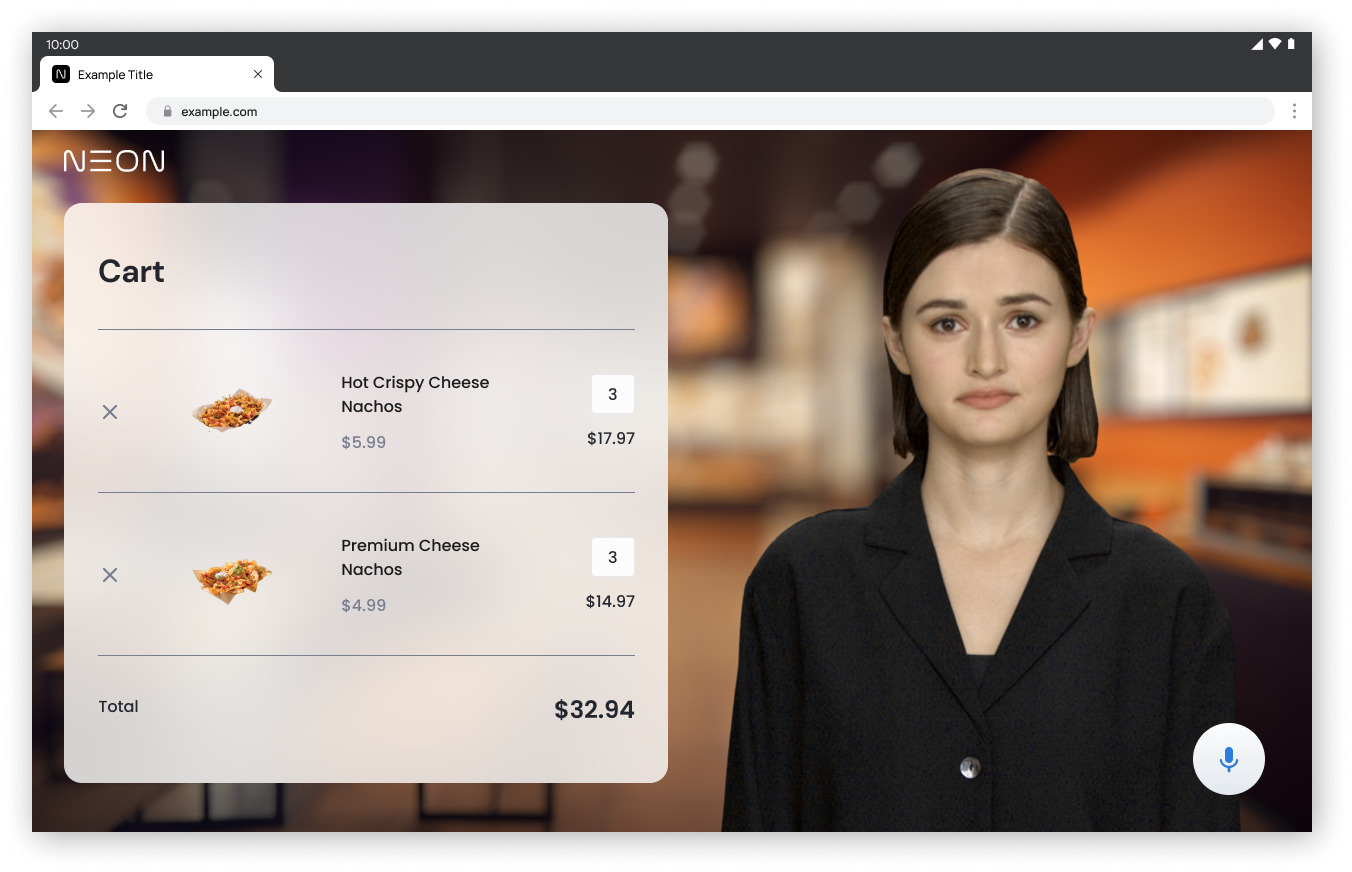
These two interfaces showcase the promotions and recommendations provided by NEON Assist to customers during the discovery phase.
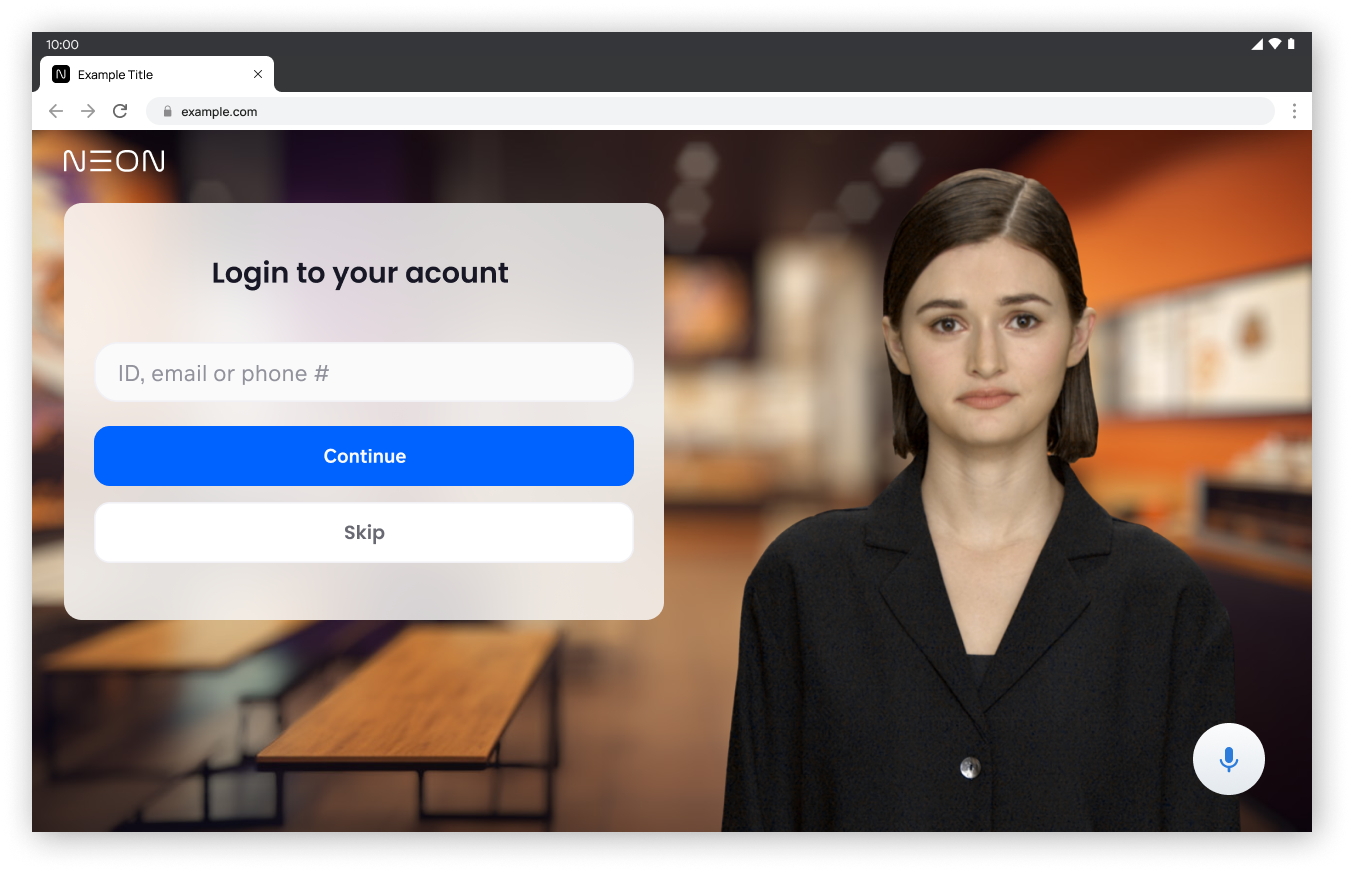
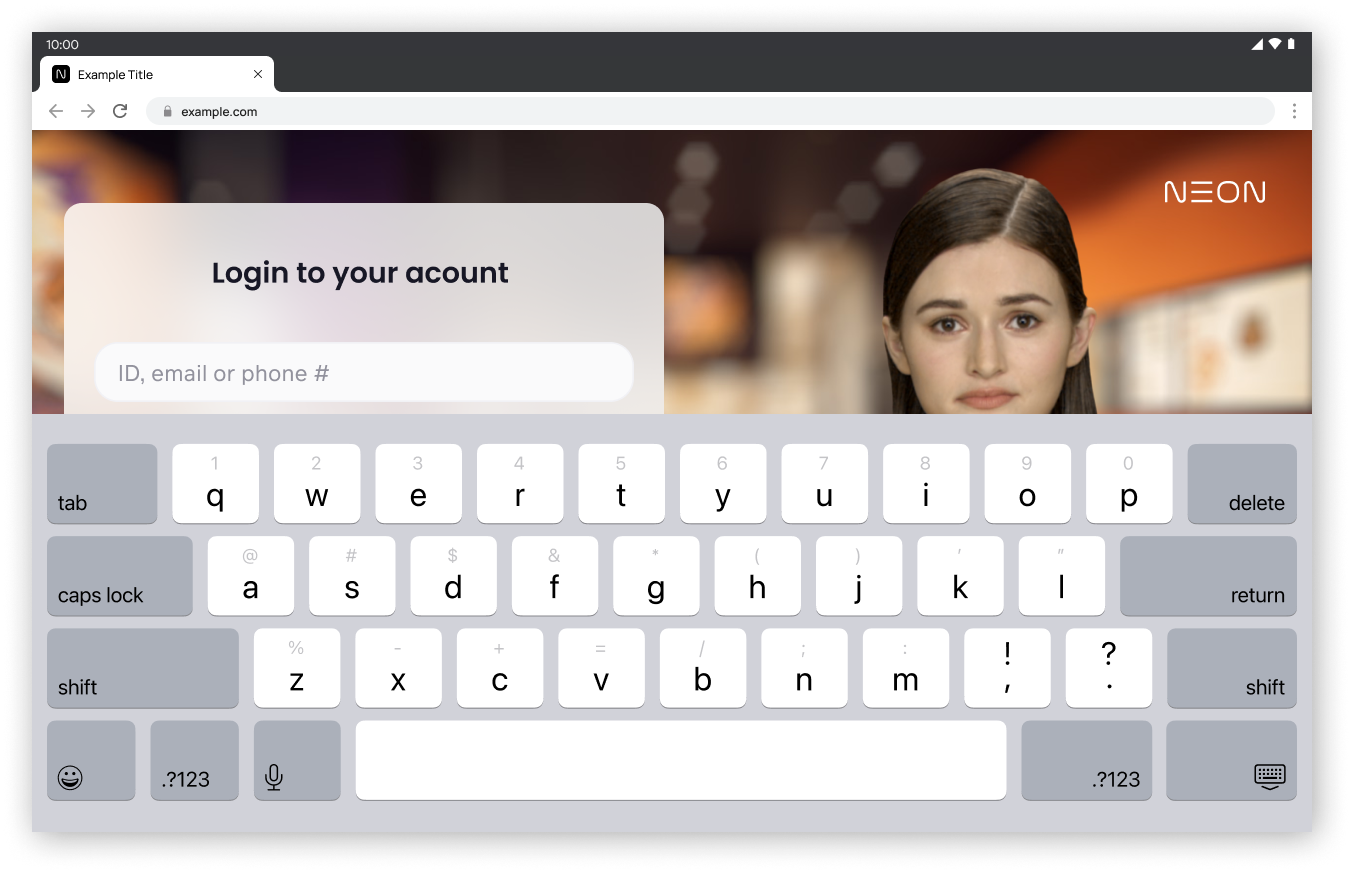
For the member login section, we ultimately decided to allow users to type in their personal account information via touchscreen. This is the only part of the experience that requires manual interaction. The primary reason for this decision was the potential security risks associated with voice-based login. We recognized that users might feel uncomfortable providing personal information through voice, making this manual input essential.
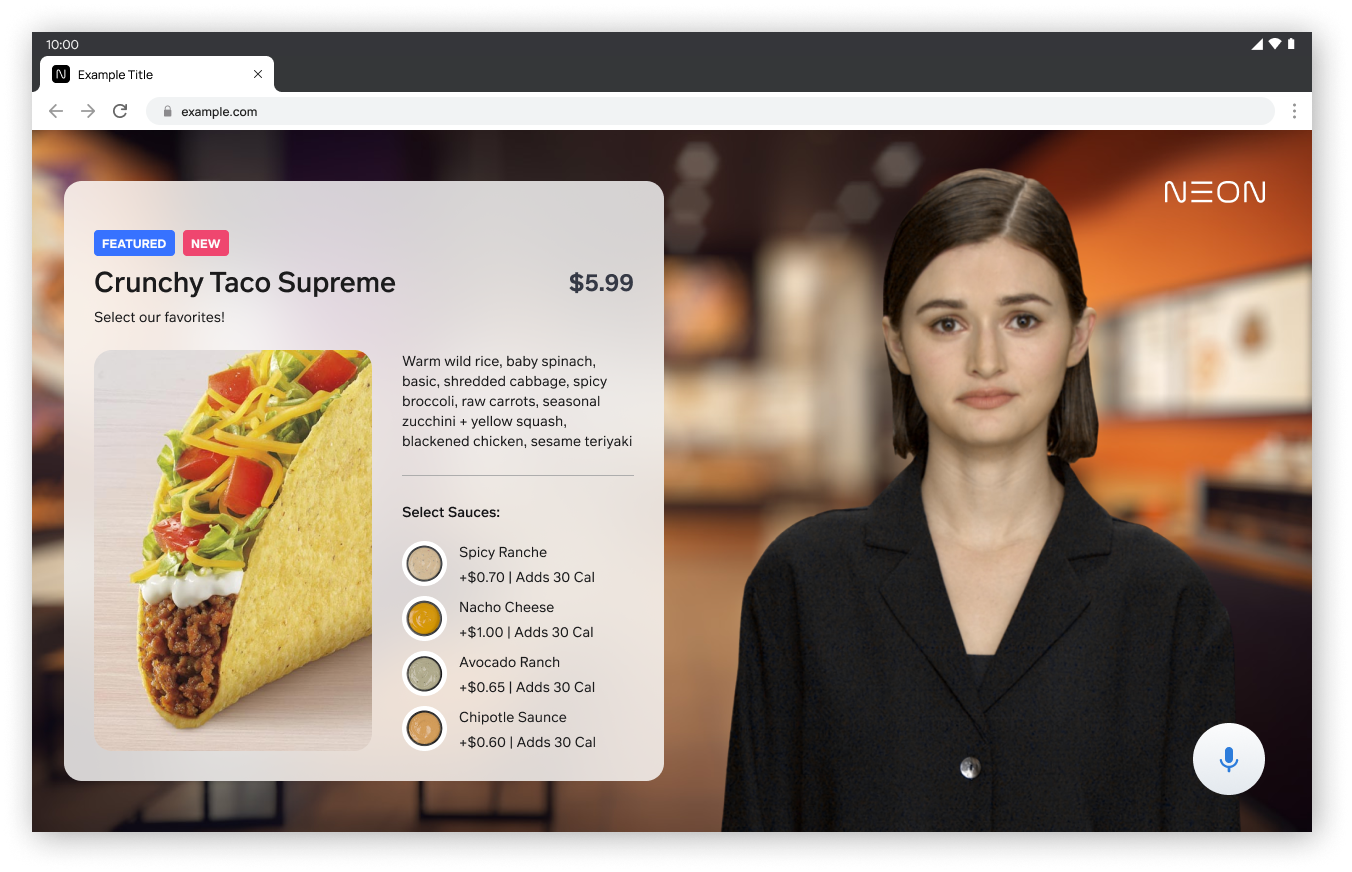
The UI for the customization order section differed from the wireframes. Through production and testing, we found that a column-based interface could display more information for customers to choose from.
If you would like to see a more detailed design for NEON Assist, please click here to access the case study with password


